Showing posts with label english-to-english translations. Show all posts

Saturday, October 9, 2010

Things we've cooked...with recipes!

Another gem from Highgate cemetery:


Fall has arrived in London! So far it's much less magnificent than New England fall, but there are a few pretty red vines and some brilliant yellow trees.


While Laura and Mark are napping in the next room (!), I thought I would share some of the things we've been cooking over the past few months, because they were really tasty and you might want to cook them, too! Some of them didn't come from recipes, so I'll try to do my best to point you in the right direction :)


I'll start with a Rogers-Loss family favorite, which is shakshuka. Danny discovered shakshuka first in Israel, at the famous Dr. Shakshuka in Jaffa, and ever since then we try to make it as often as possible. Incidentally, this is also where the chef Yotam Ottolenghi got to know shakshuka when he was growing up. I'm pretty sure I've already linked to Ottolenghi's video of how to make shakshuka, but I'm going to post it again because it's just so good. Watch it here! Or if you'd just prefer to read it, you can do that here. It's filling enough for dinner, but since it's made with eggs, we also make it for brunch sometimes.
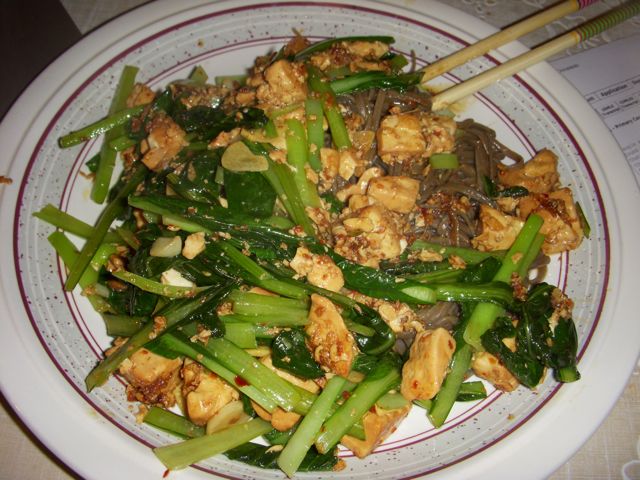

Now for something from a very different part of the globe, here is the really delicious tofu and bok choi stir fry (or as they call it here, pak choi). This recipe is super easy, and it confirmed for me that it is *always* better to marinate the tofu before cooking it, preferably with ginger and plenty of chilli. They say to serve it with rice, but I think I'm speaking for everyone when I say that noodles are better.

Hmm...lets see. If you have a garden and are still drowning in late-season zucchini (or courgette, as they say here. and in France), we really, really liked this recipe. Even if you aren't drowning in zucchini, we still liked this recipe :) Jamie Oliver is one of my heros - teaching people how to make delicious food, campaigning (and winning!) for healthier food in our schools...all good things. I'm especially pleased that our photo kinds sorta looks like the photo that goes with the recipe (except with worse lighting - stupid basement!)


Okay, now we're moving on from recipes I can easily link to, to recipes that I actually have to type out. First, Ottolenghi's cauliflower and cumin fritters (you'll notice that we've gotten a bit obsessed with this guy - gay Israeli with an Italian dad, trained at Le Cordon Bleu who states in his cookbook "If you don't like lemon or garlic...skip to the last page". What's not to love?). Seeing as they're just brown patties they don't photograph all that well, but just imagine the creamy, nutty taste of cauliflower, mixed with parsley and cumin and fried in oil, and you'll see why we were so eager to make them. Also on the plate is something I affectionately refer to as "vegetarian mush", which takes on many, many forms. In this case it consists of red lentils, some kind of winter squash, and samphire. We made it for Rosh Hashanah, but it would also be good for Hannukah alongside other fried goods. Sorry for the metric measurements, but this website seems to have good conversions.

Ingredients:
1 small cauliflower
120g plain flour
3 tbs chopped flat-leaf parsley
1 garlic clove (um, or 3)
2 shallots, finely chopped
4 free-range eggs
1 1/2 tsp ground cumin
1 tsp ground cinnamon
1/2 tsp ground turmeric
1 1/2 tsp salt
1 tsp black pepper
500ml sunflower oil for frying

1. Bring a pot of salted water to a boil. Trim the leaves off the cauliflower and snip into small florets. Add to the boiling water and simmer for 15 minutes or until they are very soft.

2. While the cauliflower is cooking, mix the flour parsley, garlic, shallots, eggs, and spices in a bowl and whisk together until smooth. Add the soft cauliflower and mix to break down the cauliflower into the batter.

3. Pour the oil into a wide pan to a depth of 1.5cm and heat until very hot. Carefully spoon in about 3tbs of the batter per fritter. Take care with the hot oil! Fry in small batches for about 3-4 minutes a side, until they are brown but not burnt. Enjoy the sound of the spattering oil!

4. Let each fritter try on a few paper towels, and serve with plain yogurt (to which you can feel free to add lemon and cilantro!), if you want.


Hungry for more fried cauliflower? I know, I know, who isn't? We've also tried this fried cauliflower with tahini sauce, which is amazing. Ottolenghi has brought tahini into our lives as something more than just an ingredient in hummus. It's another recipe that doesn't photograph well, but you can imagine. Fried food becomes healthy when you eat it with salad, right?


If fried food isn't your thing (but be honest...fried food is everyone's thing), this spinach polenta topped with tomatoes is a bit lighter but equally delicious meal that comes from a collection of Moosewood recipes we brought with us, courtesy of Danny's mom. The tomato topping doesn't call for red onion, but I added some and is was delicious, so I'll give it to you that way. This recipe makes a lot - I was eating it for breakfast for a few days!

Polenta Ingredients:
2 cups water
2 cups milk
1 tsp salt
1 cup polenta cornmeal
1 cup grated parmesan cheese
8 or more ounces fresh spinach (baby, or chopped large-leaf)

Topping:
4 large tomatoes or 8-10 plum tomatoes
1 large red onion
2 cloves garlic
2 tbs olive oil
1/2 tsp salt
1 tsp dried oregano
2 tbs balsamic vinegar

1. In a saucepan, bring the milk, water and salt to a boil. Add the cornmeal in a slow, steady stream while whisking. Simmer about 5 minutes, until the polenta is thick.

2. Meanwhile, dice the tomatoes and onions, and chop the garlic into small bits. In a saucepan on medium-high heat, heat the onions until they are soft, then add the garlic for a minute. Add the tomato and the rest of the topping ingredients and simmer for about 5 minutes.

3. When the polenta is thick, reduce the heat to low and stir in the cheese until melted and smooth. Fold in the spinach until just wilted. Serve the polenta hot topped with the tomato mix.


If you're looking for a really delicious side dish (or main dish, in our case), look no further than this simple but scrumptious grilled broccoli recipe, again from Ottolenghi.

Ingredients:
2 heads broccoli
115 ml olive oil
4 cloves garlic, thinly sliced
2 mild chillies, thinly sliced (or hot chillies, if you like!)
coarse sea salt and black pepper
optional: toasted flakes almonds or very think slices of lemon to garnish

1. Separate broccoli into florets. Fill a saucepan with water and bring to a boil (enough water to accommodate the broccoli easily). Thrown in the broccoli and blanch for 2 minutes only - don't be tempted to cook it any longer! Transfer to a bowl of ice water to stop the cooking. Drain and allow to dry completely. Once it is dry, mix with 45ml olive oil, salt and pepper.

2. Place a ridged griddle pan over high heat (or a pan in the broiler) and leave for 5 minutes, until it is very hot. Grill the broccoli, in several batches if necessary (the broccoli must not be cramped) until the have char marks.

3. While grilling the broccoli, place the rest of the oil in a small saucepan with the garlic and chillies. Cook over medium heat until the garlic just begins to turn brown - don't let it burn!

4. When all the broccoli is cooked, mix it with the chilli/garlic oil and toss. Season to taste and garnish as desired.


Okay, now on to the things that don't have recipes at all. First there is the cranberry bean stew, or at least that's what I'm calling it. In the US they are called cranberry beans, but here they call them Borlotti beans. Usually you buy them in cans but our farmers market sells them fresh, which is awesome because they are so beautiful! I think what I did here was 1) saute 2 medium onions in olive oil until they were soft, then 2) add about 3 large tomatoes, chopped. Once the tomatoes were soft I 3) added the beans and 1/2 teaspoon of salt, then let this cook for at least 30 minutes until the beans were soft and the onions were delightfully caramelized. This was really easy, and really, really delicious. The onions were so sweet it was practically dessert.

We rounded it out with some kind of scary-looking purple cauliflower and anemic looking corn. Apparently corn is meant to stay in the Americas, because this stuff is pretty bad. The cauliflower, though, was very good despite it's bizarre appearance. We blanched it in boiling water, coated it with olive oil and salt and pepper, then threw it under the grill/broiler until it was cooked through and getting brown (like the above-described grilled broccoli). Then we tossed it with fresh lemon juice, which is when it took on the magenta color.


Then there's our go-to recipe for green things. When in doubt, we saute some onions/garlic/leeks in olive oil (or occasionally butter if we're feeling decadent), then throw in the greens (sometimes we blanch them first if they seem a little tougher) and cook until they turn an edible texture. With some salt and pepper, it's hard to go wrong. Here we have runner beans on the left, and spring greens on the right.


Enjoy!

Saturday, September 4, 2010

Bank Holiday Weekend

Finally took a photo of a Vegetarian Full English Breakfast. The lighting is weird because we were eating outside!


Last weekend (August 28-30th) was a bank holiday weekend. Why? Because, as my boss put it, "In the UK we actually get holidays, though not nearly as many as Continental Europe." In addition to the expected public holidays (Easter, Christmas, New Years Day, and the Queens Diamond Jubilee to be held in 2012), there are three Bank Holiday Mondays - two of which are inexplicably held in May (Early May Bank Holiday and Spring Bank Holiday), and one on the last weekend in August. How to celebrate? It was too late to make reservations to take a true vacation, since most of England plans a weekend getaway, but we did take a day trip out of London to the New Forest National Park.

The New Forest is a good example of the difference between natural beauty in the US vs. UK. While some parts of Northern England and Scotland and North Wales are impressive, much of English beauty is more...subtle. The New Forest would never be a National Park in the US. It is mostly open grass pastures with grazing cows, horses and ponies, interspersed with pretty forests and small towns with thatched roofs. But the great thing about the New Forest is the cycling trails - many miles of cycle-only trails, and plenty of pubs and tea rooms to keep cyclists refreshed. Just an hour and half train ride from London, it's the perfect day trip! You just have to be careful, because there are often ponies on the road, on the cycle trail, and just outside the pubs...


Sunday was unimpressive in terms of what we did, although we did check out a new farmers market, which is always exciting. On Monday we ventured down to the famous Notting Hill Carnival, which is held every August Bank Holiday. Apparently it's the "largest street festival in Europe", and I'd believe it. It's an impressive West Indian cultural festival, with a parade and some of the most spectacular costumes I've ever seen. It's also an impressive display of young Londoners' eagerness to get drunk in the middle of the day (you could buy shots at tables set up on the sidewalk), and their ability to tolerate huge crushes of people. We left relatively early to go play ultimate with Curve - we hadn't been in over a month! Then we came home and made Shakshuka. All in all a great weekend!

Friday, August 27, 2010

Explaining Cricket

Okay, before I start on this most difficult task, RPOTD:

The vegetarian alternative to a sausage - baguette with cheddar, smothered in onion and real ale chutney.


Okay, now it may seem a little strange that I am writing this post and not Danny, but we decided that since I wasn't quite as deeply embedded in cricket stats and history, maybe I would have a better perspective on how to explain it to people who know nothing about it. My goal is to explain this humorous description that's been hanging in our bathroom for the last 4 years:


Object of the Game:
There are two teams, and the object is to score more runs than the other team. Like most other sports, this is done through a combination of scoring lots of runs, and preventing the other teams from scoring too many. Good so far?

Overall Structure of the Game:
Each team has 11 members. I didn't want to use too many baseball analogies, but I will use this one: imagine a baseball game with only two innings, where one team bats, then the other teams bats, then they each bat one more time, then the game is over. That's cricket.

The Pitch:


A cricket pitch, or field, is a large grass oval, and in the middle there is a thin dirt rectangle, called the wicket. At each end of the wicket there are three wooden posts, with two small pieces of wood bridging the top. These are called the stumps. The main action of the game takes place on the wicket, but there are defensive fielders on the rest of the pitch. Fielding positions are fairly fluid, though there are people who specialize in being far from the wicket, and some who specialize in being close to the batsman.

Central Tension:
The main interactions of the game involves 2 people batting, and 2 people throwing the ball towards them, called bowling. At any given moment, however, there is only one bowler bowling to one batsman - the other bowler and batsman stand to the side of the stumps and watch. The batsmen stands in front of his stumps and swings his bat to prevent the ball from hitting the stumps. By hitting the ball he can also score runs (see below). Each bowler goes 6 times from one end of the wicket (6 balls is called an over), then the other bowler goes 6 times from the other end of the wicket, and they go back and forth, bowling to whichever batsman is on the opposite end of the wicket. Also, the physical act of bowling is quite strange to watch at first, and bowlers must keep their arm straight for the entire bowling motion, and they are often trying to bounce the ball off the ground in funny ways.

Scoring Runs:
Each time the batsman hit the ball, there are several options. If the ball doesn't go very far, he can just stand there and wait for a fielder to throw the ball back in to the bowler. This does not score any runs. This is totally fine and happens a lot. If the ball goes a moderate distance, he and the other runner can each run to the opposite stump, crossing in the middle - this gets them a point. If the ball is still out in the field they can switch again, for another point, and so on. However, if the ball is hit a long way and rolls all the way to the boundary of the pitch, this is an automatic 4 points. If this ball is really given a good whack and clears the boundary in the air, it's a automatic 6 points.

Getting Out:
While the batsmen are hitting balls, trying to run back and forth, the bowlers are trying to get them out, and there are several ways that this can happen. If the batsmen misses and the ball hits the stumps, it is out (bowled). If the batsmen hits it in the air and it is caught, it is out (caught). If the batsmen try to run back and forth and one of the fielders throws it back and hits the stump before the runner gets close to the stump, it is out (run out). If the batsman lets the ball his his leg (which has ample padding), and the umpire determines that the ball would have hit the stumps if it hadn't his the batsman's leg first, it is out (leg before wicket, or LBW). In other works, you can't defend the stumps with your body. These are the main ways you can get out. I should also point out that there is some confusing terminology here. While a wicket describes the middle, getting people out is described as "taking wickets", and getting out is "losing wickets".

Overall Game Play:
Like any good game, it starts with a coin toss. The winner of the toss decides, based on the weather and conditions of the pitch, if they want to field first, or if they want to "have a bat." The fielding team, all 11 of them, go out on the field: 2 bowlers and 9 other fielders in various positions. The batting team has established a batting order, and the first two batsmen put on their kit, or pads, and go out to the wicket. Everyone else on the batting team sits in the clubhouse, watching and eating candy. The first bowler bowls 6 times, then the next bowler goes 6 times, etc, trying to get the batsmen out in one of the 4 ways described above, and the bowlers try not to get out and to score runs. If one of the batsmen gets out, he goes back to the bench to eat candy, and the next batsmen comes in. It continues like this until 10 of the batsmen have gotten out, even though the last person is "not out", because you can't play with just 1 batsmen. Then the teams switch - the team that was batting now goes out into the field, and the team that was in the field puts their first two batsmen onto the wicket. This cycle goes through twice, so each team bats twice and each team fields twice.

And in terms of bowling, any given team has 4 or 5 people who specialize in bowling. They tend to be less good at batting, though there is the occasional all-rounder. So at any given time 2 of these bowlers are taking the position of the bowler, and the other 2 or 3 are just part of the fielding positions. The bowlers can move in and out of the bowling positions fairly fluidly throughout the game.

Duration of the Game:
What's I've described is a multi-day match, which is the traditional form of the game. This can either be 4 or 5 days. So it's an approximation that in a 4 day match, each team will bat for about a day, then field for a day, then bat for a day, then field for a day. But of course this is subject to a huge amount of variation. In today's match, as Danny has discussed, England lost 4 wickets in about 10 minutes, which if you extrapolated suggested that England might only bat for 30 minutes! However, if the batsmen are doing really well, your team could be batting for almost 2 days. There's also a lot of individual variation - today Kevin Pietersen got out on the first ball bowled to him, while Jonathan Trott stood out there and batted ALL DAY. So unlike many other sports, in these multi-day matches it's generally more important to bat for a long time and focus on not getting out than to try an score runs quickly. So the progress of the game is really measured in how many outs have been made.

A Note about Scores:
In these long matches, scores are in the multiple hundreds. The best batsmen are hoping to score 100 runs by themselves, called a century. The record for most runs scored by a single batsmen in one match is by Brian Lara of the West Indies, 400 and not out. The most runs a team has scored in one turn batting is 952 by Sri Lanka in 1997. So the 346 that England scored today, with 7 outs, is very respectable.

Exceptions to these rules:
Way to many too list here, of course. There are some shortened versions of the game, some situations where a team might bat twice in a row, sometimes when getting points quickly is essential, bad weather conditions that truncate the match, etc. But that is the basic premise of the game.

Howzat!?

Wednesday, August 11, 2010

Cheeses of England #3: Fresh Iambor

Disclaimer: this is not a typical English cheese. It is a buffalo cheese, inspired by traditional Romanian cheese-makers, but it is made in Somerset and sold at our farmers market, so it counts as an English cheese. The maker is Alham Wood Organics, and they make a range of buffalo and cows cheeses and yogurt, both pasturized and "raw". This is one of the pasturized fresh cheeses, or Iambors. Danny describes it as "solid ricotta", but I think it has a much more mature and slightly saltier taste. Maybe a cross between ricotta and feta. It was really delicious on the olive bread we got from one of the stalls at the farmers market, the name of which we now cannot remember. The bread was delicious, if a little expensive, but it was sold to us by a French man, and when a French man offers you freshly baked bread, you take it.

Alham Wood also makes the cheese-tasking yogurt (or yoghurt, if you prefer). Next time I'm going to go crazy and try the buffalo yoghurt!

Wednesday, August 4, 2010

The Great British Beer Festival

Two beer festivals in ten days!  A few Fridays ago, after spending the morning exploring the cathedral precincts of Canterbury, we went to the Kent Beer Festival.  Impressive as that was, it was a mere taster to the main event, the Great British Beer Festival in Earls Court.

The highlight, of course, was the hundreds of beers on offer.  Here's what we tried, along with our notes, which, as you might expect, got sillier as the day went on.

Kipling South Pacific Pale Ale by Thornbridge Brewery, Derbyshire
[We hadn't thought to write down any notes at this point - shame on us!]

Sunchaser by Everards, Leicestershire
Sour nose.  It was at this point that I made a bad drawing of a nose on our sheet of paper.

Chocolate and Vanilla Stout by Titanic, Staffordshire
Becca: Smells like vanilla.
Danny: Super-sweet nose, more balanced taste.  Long vanilla finish.

Honey Buzzard by Cotleigh, Somerset 
Becca: "That's not copper!" [In response to the putative copper color.]  "Not tasting the honey - it tastes of anti-honey?"
Danny: Subtle flavor, increasingly chocolate with more sips.  Soft (weak?) finish?

Norwich Terrier by Buffy's, Norwich
We chose this one, as you might have guessed, in homage to a particular pooch.
More aftertaste than taste.

Triple Chocoholic by Saltaire, Yorkshire
Becca: "Chocolate chocolate chocolate!  Ack!"
Danny: "None blacker.  Washes over you with a wave of goodness."

Pegasus by Milton, Cambridgeshire 
Becca: "Really interesting nose... caramelly.  Toffee, since were in England.  Aftertaste goes on forever."
Danny: "Smooth but bright."


Echte Kriekenbier by Verhaeghe, Belgium
Becca: "Tart.  Definitely on the girly side."
Danny: "Ridiculous foamy head."


Lots more to the beer festival than just beer.  For instance...
Carnival games!
Exhibits of beer ingredients!  It turns out that caramel malt tastes just like Grape-Nuts.  Who knew?
And food!  And no, we have no idea what goes in a breakfast pie or why they would be selling such a thing in the late afternoon.

Also, table football (foosball).  After Becca scored four quick goals against my weak defense, my ball control skills returned and I scored five on the trot to take the game 5-4. 

On the whole, a good way to spend a rainy London day.  The concrete floor and convention center atmosphere may have diminished the real ale charm a bit, but it's hard to complain when the outcome (us getting to try lots of yummy beers at reasonable prices) is so good.

Five Days in the Lake District, part 2

Coming to you 10 days later, it's the 2nd day of our rambling/hill walking trip!

We woke up in the Black Bull Hotel in Coniston to dry weather and patches of blue among the clouds. Score! One delightful aspect of the trip was that 3 out of 4 places we stayed were B&Bs, so breakfast was included. That morning, our vegetarian version of the full English breakfast included tea, orange juice, toast, jam, cereal, 2 eggs, beans, fried mushrooms, grilled tomatoes, and fried bread. Not a bad way to start a day of walking!

Our plan for this day was to hike the standard day 2 of The Cumbria Way, which technically goes from Coniston to Great Langdale, but hotels in Great Langdale were limited and pricey (we discovered why when we were there), so we opted instead to spend the 2nd night in Grasmere, another picturesque town on a lake, 2 miles off the Way.

The day started with a little bit of climbing out of Coniston, but generally this was much more of a rambling day than a fell-walking day. Forests mixed with rolling, grassy, sheepy hills led the way to Tarn Howes, a large lake that used to be 3 separate lakes until a dam was build downstream. This of course led to a discussion about how even what we consider to be beautiful and "nature" today may have been shaped by human hands in the past, and in this case you wouldn't know it unless you stopped into the helpful visitor information booth.

From there to the small town of Elterwater the terrain was mostly rolling farmland, with many picturesque farmhouses, views into green valleys, and the ever-intriguing stone walls from centuries ago. All of these stone walls necessitate one of the most charming features of the Way - the bizarre collection of ways there are to get over and through these walls. In some places there are wooden steps, or stiles, to simply climb over the wall. In some places there is a space in the wall and there is a gate to let you through - either a standard swinging gate (with a variety of locking/closing mechanisms) or more involved kissing gate. Or there was our favorite, the tiny gate at the top of the wall with embedded stone steps. Amazing. This funny little website has a nice picture and description of a kissing gate. Or, if you want to build your own, check out this one.

Somehow we managed to navigate all of these gates and arrive at Elterwater, first the water itself, then the tiny village. The lead-up was a very nice flat path alongside the lake with an open field where many people were playing with their dogs. Overall, I was very impressed with how the dogs, for the most part, were refraining from chasing the sheep. Elterwater is home to the Britannia Inn, which has a nice pub and is very clearly a haven for cyclists, ramblers and hill walkers alike. We stopped in to enjoy a cup of tea and a scone, and to try Coniston Brewing Company's special "Britannia" ale.

It was in Elterwater that we diverged from the Way to hike up and over a small ridge and into Grasmere. It was actually nice to gain some elevation after a day of walking in valleys, and from the top of the hill the views back to Elterwater and down into Grasmere, which is of course situated on yet another lake, were great. In Grasmere we were staying at a youth hostel, though this term is a bit misleading, as the other guest ranged from young children to couples in their 60's. Another reason I wanted to detour to Grasmere is because I couldn't resist the name of this hostel: The Grasmere Butharlyp Howe. We scouted out what looked like the restaurant with the best veggie options (a caramelized onion, walnut and stilton tart for a starter, and sticky toffee pudding for, um, pudding, though actually in the North they just call it all "sweets"), devoured our food, enjoyed a few local beers back at the hostel (the "Scafell Blonde" and "High Pike" from Heket Newmarket Brewery, for those of you keeping track at home), and were in our bunks by 10pm.

Approximately 12 miles walked
Towns: Elterwater, Grasmere
Peaks: none

Thursday, July 22, 2010

Banking follies

The downside to the apparently incompetent RBS staff who neglected to order a debit card to go along with our current (checking) account: not having a debit card.

The upside to the apparently incompetent RBS staff who neglected to order a debit card to go along with our current (checking) account: calling the RBS helpline (at 8:30 PM on a Thursday!) and being promptly helped by a friendly Scottish woman who said, "Just a wee moment," at least three times.

Yup, this was one of those "British people talk funny!" posts.

Friday, July 16, 2010

THE HEATH

First, RPOTD:


Aaron may have our panini press, but you will never quench my love of hot, melted cheese sandwiches. I've discovered that one of the joys of being home during the day is that I can make a fresh lunch every day if I want. And while a sandwich may not seem that exciting, a hot sandwich of farmer's market produce that has spent a few minutes under the grill is simply delightful. Also, the gas grill/broiler makes for a pretty cool photo:

Not as cool as Danny's photo of shakshuka cooking, but still not bad.

Okay, on to the topic of this evening's post, which is the makeshift backyard of north Londoners, Hampstead Heath. I'm trying not to let this blog become just a list of reasons why London is super awesome (I'm sure the longer we live here the more we'll find faults), but with Hampstead Heath it's hard to say anything less than glowing.

800 acres, miles of running trails, panoramic views of central London, a running track, an outdoor pool, 3 swimming ponds (!) and multiple wildlife ponds, countless rolling hills and small wooded copses, plus everything in the acres we haven't yet explored. It's clean (minus the dog poop) and breezy and attracts everyone from teenagers to elderly dog-walkers. Listing all of this is not enough...simply put, being just a few minutes inside Hampstead Heath makes you feel that you are in the English countryside. It is the perfect place for evening strolls or early morning walks. Our first (of many, I'm sure) evening walk last week afforded these sights:


A much-used, dog-friendly swimming hole; view south to central London; view north to Highgate; a particularly picturesque tree.


And tonight, it was the perfect place for a picnic! Lucky for us, Hampstead Heath is just a half a mile from our flat, making it our makeshift patio. And especially lucky is that there is an excellent wine shop ("Corks"), and it's sister gourmet food shop ("Forks"), right on the way. With the last serving of our food from last Saturday's farmers market, here's what we came up with:


And around 9pm, we were treated to this beautiful sunset. The photograph doesn't do it justice, but there were pink clouds everywhere. Now on to Danny's birthday weekend!